
In short
To buy African art in Arusha, visit The Collectors at the Cultural Heritage Centre on Dodoma Road: about 440 paintings, carvings and sculptures, with free entry and prices on request. Check the artist, signature, condition and provenance, and roll unframed canvases paint side out for travel.
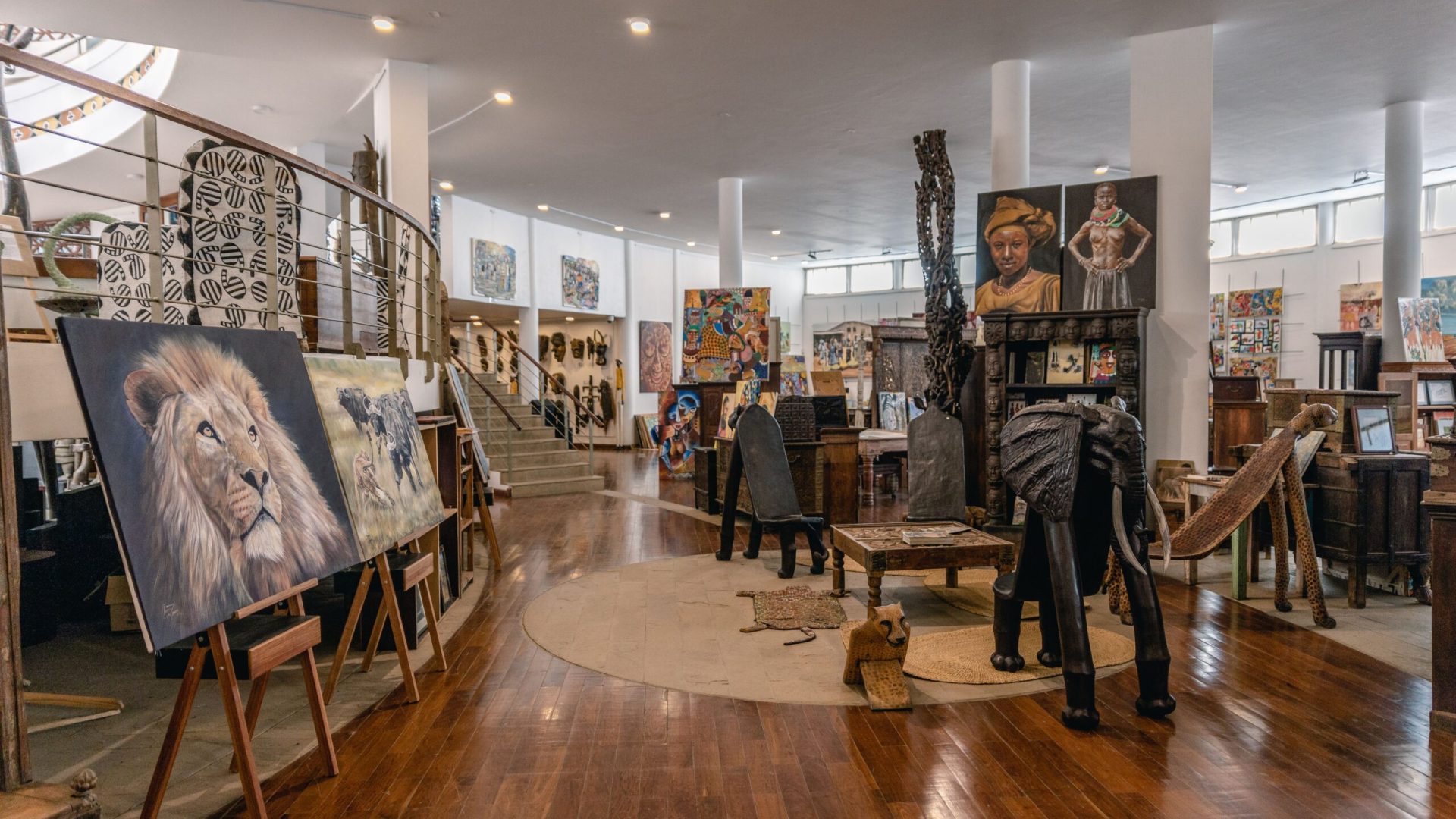
The safest way to buy African art in Arusha is from a gallery where you can see originals and learn who made them. The Collectors, at the Cultural Heritage Centre on Dodoma Road in Arusha, holds about 440 works: oil and acrylic paintings by East and Southern African artists, Makonde and Shetani carvings, masks and Mike Ghaui’s bronze wildlife sculpture. Entry is free; prices are on request.
What kind of African art can you buy in Arusha?
Arusha sells everything from roadside souvenirs to serious contemporary painting and sculpture. For original work, start at The Collectors, an African art gallery in Arusha that ranks among the largest on the continent, with work by artists from across East and Southern Africa.
Painting makes up most of the collection, chiefly oil on canvas and acrylic, by artists such as Calvine Zvenyika, Isheanesu Veremu, Munyaradzi Chibaya, Berthold Moyo, Keith Zenda, John Mahove, Lusingu Mvungi and Kano Derrick. The rooms are arranged by theme, so wildlife painting, for example, hangs in Wild Africa.
Beyond painting, you will find:
- Bronze and silver sculpture: wildlife pieces by the sculptor and painter Mike Ghaui, who has a room devoted to his work.
- Makonde carvings: from the carving tradition of the Makonde people of south-eastern Tanzania and northern Mozambique, best known for sculpture in dense African blackwood (mpingo).
- Shetani carvings: spirit figures with twisting, exaggerated forms, a Makonde style that emerged in the mid-twentieth century.
- Wood figures: hand-carved figurative sculpture in a range of styles.
- Masks and headdresses: including Chiwara antelope headdresses, a form linked to the Bamana people of Mali and to farming.
New to the subject? Our short story of East African art is a useful primer.
How do you judge an African painting before you buy?
Check five things: the artist, originality, the signature, condition and provenance. Then ask whether you will still want to see it every day in five years.
- Artist: ask the artist’s name, where they work and what else they have made. A good gallery can show you other pieces by the same hand.
- Originality: confirm whether it is an original painting, a print or a copy, and what the medium is. “Oil on canvas” should mean exactly that.
- Signature: a painted signature sits in the paint layer and matches the artist’s other work. Some artists also sign, title and date the back of the canvas.
- Condition: look at the corners, edges and back. Watch for cracking, flaking, a sagging canvas, water stains, mould or fading from sunlight.
- Provenance: for contemporary work, this is a clear record of who made the piece and who sold it. Ask for a written invoice that names the artist, title, medium and size, and keep it.
Know your media, too. Oil dries slowly and allows rich blending, while acrylic dries fast and stays more flexible once dry, which matters when you pack the work for a flight.
How can you tell airport art from original work?
Mass-produced “airport art” repeats the same image or pose many times, usually with no named maker. An original shows the hand of one artist: varied brushwork, individual choices and a person the seller can name.
Souvenirs have their place. The trouble starts only when a copy is sold as a one-of-a-kind original, and these quick checks help.
Paintings
- Tilt the canvas against the light. Real brushwork leaves ridges and texture; a print on canvas looks flat and, close up, may show a fine dot pattern.
- Turn it over. The back of an original often shows paint bleed, notes or the artist’s mark; printed canvases tend to be clean and uniform.
- Compare signatures. One signature across very different styles at the same stall is a warning sign.
- Count the copies. If ten near-identical paintings hang side by side, none of them is a unique work.
Carvings
If a seller says a carving is African blackwood, it should feel very heavy for its size, with a fine, dense grain. Softer timber stained black is lighter, and the stain may rub off on a damp tissue. Rows of identical, machine-smooth figures point to workshop production.
Never buy ivory, rhino horn or sea turtle shell. International commercial trade in all three is banned, and you risk seizure and prosecution at customs.
How does buying art at The Collectors work?
Prices at The Collectors are given on request, not printed. Choose the works you like, online or in the gallery, and the team will confirm price and availability.
- Browse: explore the collection online by exhibition room, by artist or by medium.
- Select: add anything that interests you to your selection. You can gather several works before you ask.
- Ask for prices: send your selection, and a member of the team will confirm price and availability.
- Ask questions: about the artist, size, condition or getting the work home, by phone or WhatsApp on +255 748 078 278.
Works marked “in a private collection” have been sold but stay online, which makes them a good way to learn an artist’s range. You can start online and finish in the gallery, still the best place to judge scale, colour and texture.
Should you frame or roll a canvas for travel?
Carry small stretched canvases as they are, and roll larger unframed canvases to frame at home. Framed work under glass is heavy, fragile and travels badly.
- Small canvases: often fit in cabin baggage; check your airline’s size limits.
- Rolling: take the canvas off its stretcher bars and roll it paint side out around a wide, rigid tube, with acid-free tissue or glassine between the layers.
- Dryness: roll only work that is fully dry. Acrylic dries quickly; thick oil paint takes much longer, and heavily textured or cracked paint should not be rolled at all.
- Margins: keep the unpainted border of the canvas intact so a framer at home can restretch it.
- Sculpture and carving: bronze and blackwood are heavy, so check your baggage allowance or ask about shipping before you buy.
Keep your invoice in your hand luggage. It helps with any customs questions and is the first page of the work’s provenance.
What is it like to visit The Collectors exhibition rooms?
The gallery is built around a spiral atrium known as the Ascension of Africa, with works grouped into themed rooms. Allow an hour or more, and longer if you are buying.
The current rooms are Faces of Africa, Figures of Africa, Wild Africa, Abstract Africa, Life of the People, Women of Africa and a room for Mike Ghaui. The exhibitions page shows what hangs in each.
The Collectors at a glance
- Where: Cultural Heritage Centre, Dodoma Road, Arusha, about 15 minutes’ drive from the town centre
- Collection: about 440 works, mostly oil and acrylic painting
- Also: bronze and silver sculpture, wood figures, Makonde and Shetani carving, masks and headdresses
- Entry: free
- Open: every day; check the Visit page for current hours
- Prices: on request
- Contact: +255 748 078 278 (phone and WhatsApp)
The gallery is one of four worlds at the Centre, a family business founded by Saifuddin and Zahra Khanbhai and run for about three decades. The Vault jewellery house and The Market for crafts share the site, and our guide to planning a safari from Arusha shows how to fit a visit in.
Frequently asked questions
Is it free to visit The Collectors art gallery in Arusha?
Yes. Entry to The Collectors, and to the galleries, market and workshops of the Cultural Heritage Centre on Dodoma Road in Arusha, is free. The Centre is open every day of the week; check the Visit page on culturalheritagetz.com for current opening times before you set out.
How do you find out the price of a work at The Collectors?
Prices at The Collectors are given on request. Add the paintings or sculptures you like to your selection in the online shop and send it, and a member of the team will confirm price and availability. You can also ask in person at the Cultural Heritage Centre on Dodoma Road in Arusha, or on WhatsApp at +255 748 078 278.
Where can you buy Makonde carvings in Arusha?
The Collectors gallery at the Cultural Heritage Centre on Dodoma Road in Arusha holds Makonde and Shetani carvings alongside wood figures, masks and headdresses. Makonde carving comes from the Makonde people of south-eastern Tanzania and northern Mozambique and is best known in dense African blackwood. Look for real weight, fine grain and individual detail rather than rows of identical, stained figures.
Can you roll an oil painting to take it home on a plane?
Yes, as long as the paint is fully dry and not thickly textured or cracked. Take the canvas off its stretcher, roll it paint side out around a wide tube with acid-free tissue between the layers, and keep the unpainted border so a framer can restretch it. Acrylic paintings are usually more flexible than oils.
What does “in a private collection” mean on The Collectors website?
It means the work has been sold. The Collectors marks sold pieces as “in a private collection” and keeps them on its website. They are a useful way to understand an artist’s style and subjects before you ask about paintings, carvings or sculptures that are still available.
For anyone looking for Tanzanian art for sale, the best judge of a painting is still your own eye in front of it. Plan your visit to the Centre, or browse the collection online and start your selection.