
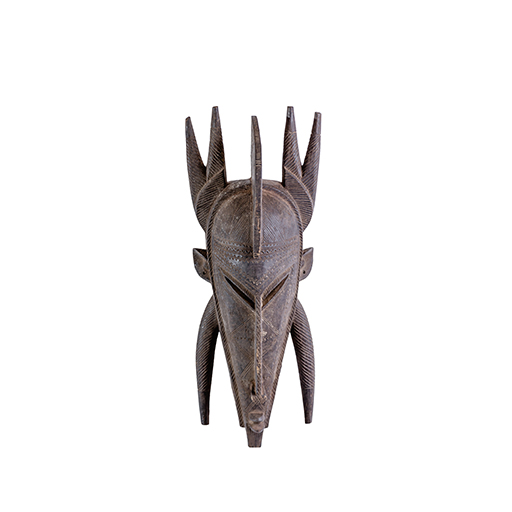
Preserving ceremonial heritage means protecting both the rites that mark life’s turning points, such as initiation, marriage and elderhood, and the masks, headdresses and beadwork made for them. Communities keep it alive by passing rites on, artists by carving and beading, and galleries by displaying the work. At the Cultural Heritage Centre on Dodoma Road in Arusha, you can see masks, carvings and Maasai beadwork free of charge.
What counts as a ceremonial object in African tradition?
A ceremonial object is anything made to be worn, carried or displayed during a rite: masks, headdresses, staffs, figures and personal adornment. Many were never meant to sit still; they came alive in dance, song and costume.
One of the best-known examples is the Chiwara antelope headdress of the Bamana people of Mali in West Africa. Fixed to a basketry cap and worn with a fibre costume, it is danced in male and female pairs.
Closer to Arusha, Makonde carvers from both banks of the Ruvuma River, in southern Tanzania and northern Mozambique, make mapiko masks. Most are helmet masks, worn over the head by male dancers at celebrations linked to initiation.
Ceremonial objects at a glance
- Chiwara headdress: Bamana people, Mali; carved wood; danced in pairs at agricultural festivals.
- Mapiko mask: Makonde people, Tanzania and Mozambique; carved wood, usually a helmet mask; initiation dances.
- Mwana pwo mask: Chokwe people, Angola, DR Congo and Zambia; honours women; danced by men.
- Beaded collars and headpieces: Maasai of Kenya and Tanzania, and Samburu of Kenya; worn at weddings and age-set ceremonies.
- Shetani carvings: Makonde; sculptures of spirit beings, a modern style made for sale rather than for rites.
What happens at initiation and coming-of-age ceremonies?
Initiation ceremonies mark the move from childhood to adulthood. Young people are often set apart for a period, taught the duties and values of adult life, and then welcomed back with dance, feasting and new dress.
In many communities, masks appear at these moments, standing for ancestors or spirits who watch over the change. Because what is taught during seclusion is private, communities guard closely what outsiders may see.
The Maasai Eunoto ceremony
Among the Maasai of Kenya and Tanzania, men’s lives are organised by age-sets, each stage marked by ceremony. Eunoto is the graduation of the warrior years, when a generation of warriors, the ilmurran, moves a step closer to elderhood. Its best-known moment comes when mothers shave their sons’ long, ochre-coated hair, a sign that one chapter of life has closed.
Why does beadwork matter so much in ceremonies?
Beadwork shows who a person is and what stage of life they have reached. At ceremonies it becomes a public statement of age, status, marriage and belonging.
A Maasai bride wears heavy beaded collars and headpieces made by the women of her family, and warriors wear beaded ornaments too. Samburu women in northern Kenya layer many necklaces at once. Colour carries meaning as well, as our guide to how Maasai beadwork colours speak explains.
Venetian glass chevron trade beads, with their layered star pattern, travelled into Africa for centuries and are still prized. In The Vault, the Centre’s jewellery house, you can see Maasai and Samburu beadwork necklaces and bracelets alongside chevron and trade-bead necklaces.
How do you collect ceremonial objects ethically?
Ask where a piece came from, who made it and whether it was ever used in a sacred rite. Works made by artists for sale or display are a sound choice; sacred items taken from a community without consent are not.
Many ceremonial objects left Africa during the colonial period without their communities’ agreement, and European museums have begun returning some, such as the Benin Bronzes to Nigeria. A few simple habits help collectors today:
- Ask about provenance: who made the piece, where and when.
- Prefer works made by living artists for sale or display.
- Be wary of anything sold as “from a shrine” or “used in rituals” without a clear history.
- Ask for paperwork with older pieces, since many countries restrict the export of antiquities.
- At a live ceremony, ask before you photograph people and follow your guide’s lead.
How can ceremonial heritage be preserved today?
Ceremonial heritage lasts when communities keep holding their rites, artists keep making the objects, and galleries show the work in context to people who may never attend a ceremony.
At The Collectors, the Centre’s art gallery and one of Africa’s largest, the collection includes masks and headdresses such as the Chiwara, wood figures, and Makonde and Shetani carvings, alongside oil and acrylic paintings by East and Southern African artists. Its exhibition rooms include Faces of Africa and Figures of Africa. For the wider picture, read the story of East African art.
Frequently asked questions
What is a Chiwara headdress?
A Chiwara, also spelt Ci Wara, is a carved wooden antelope headdress made by the Bamana people of Mali. It honours a mythical being said to have taught people to farm, and dancers wear it in male and female pairs at agricultural festivals. The male usually has a tall openwork mane, while the female often carries a young antelope on her back.
Is it ethical to buy an African mask?
It can be, if you know what you are buying. Masks carved by living artists for sale or display support craft traditions and raise far fewer concerns. Avoid pieces said to have been used in sacred rites unless their history is documented, and ask for paperwork with anything old, since antiquities often need export permits.
Can visitors attend a Maasai ceremony such as Eunoto?
Eunoto is not staged for visitors. It is a major community event held when the Maasai themselves decide an age-set is ready, and years can pass between ceremonies in any one area. If you are ever invited through community contacts, ask before taking photographs and follow the guidance of your hosts.
Where can I see ceremonial masks and beadwork in Arusha?
You can see them at the Cultural Heritage Centre on Dodoma Road, about 15 minutes’ drive from Arusha town centre. The Collectors gallery holds masks, headdresses such as the Chiwara, wood figures and Makonde carvings, and The Vault shows Maasai and Samburu beadwork. Entry is free and the Centre is open every day; its Visit page lists current hours.
To see masks, carvings and beadwork in person, plan your stop with our Visit page, or browse masks, figures and paintings in The Collectors online gallery. Entry is free and the Centre is open every day.