
Tanzanite: The Gem Found Nowhere Else on Earth
In short
Tanzanite is found only in the Merelani Hills of northern Tanzania, near Mount Kilimanjaro, where it was discovered in 1967. Its rarity comes from that single small deposit. This guide covers its colours, grading, care, how it compares with sapphire, and where to see it in Arusha.
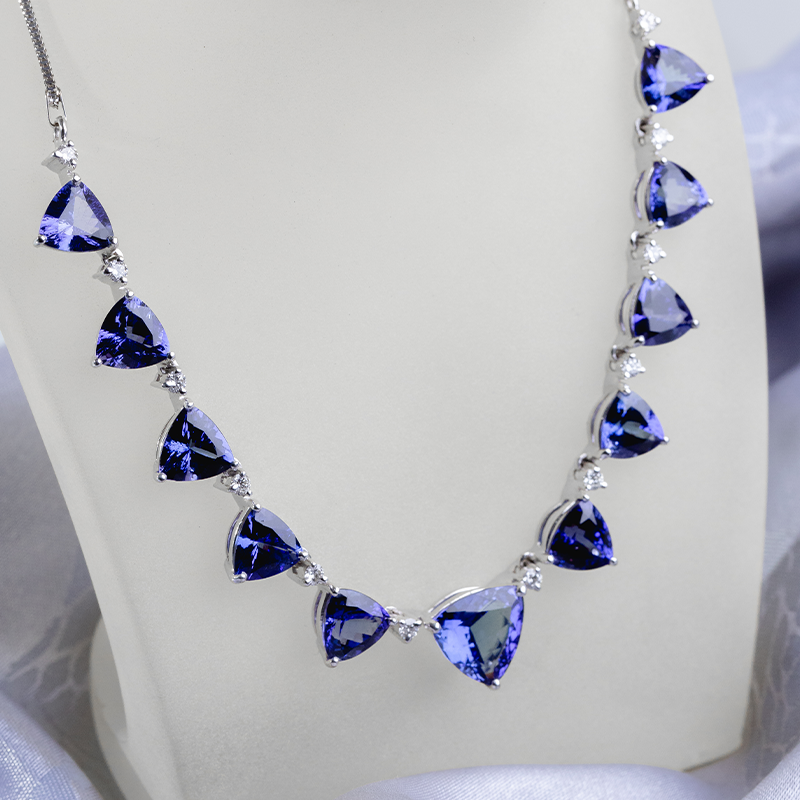
Tanzanite is found in only one place on Earth: the Merelani Hills of northern Tanzania, near Mount Kilimanjaro, where it was discovered in 1967. A blue-violet variety of the mineral zoisite, it flashes blue and violet as you turn it. Visitors can see a large selection of Tanzanite jewellery at The Vault, part of the Cultural Heritage Centre on Dodoma Road in Arusha.
To see the stones in person, visit The Vault at the Centre. You can also browse The Vault online or contact the jewellery team with questions about a piece.
Where exactly is Tanzanite mined?
Tanzanite is mined in the Merelani (also spelt Mererani) Hills in Simanjiro District, Manyara Region, close to Kilimanjaro International Airport. The whole commercial deposit is a narrow strip only a few kilometres long.
Since 1990 the area has been divided into Blocks A to D, worked by larger companies and small-scale miners. Rough crystals are traded locally, and Arusha is the main centre of the Tanzanite trade.
When was Tanzanite discovered, and how did it get its name?
Tanzanite was found in the Merelani Hills in 1967 and introduced by Tiffany & Co. in 1968. Accounts of the discovery differ: the Gemological Institute of America tells of a Maasai herder who found blue crystals and alerted a local prospector, Manuel de Souza, while Tanzania’s government recognises a local man, Jumanne Ngoma, as the first finder.
Mineralogists first called it blue zoisite. Tiffany & Co. renamed it after its only source country and launched it with the line that it could be found in just two places: Tanzania and Tiffany’s.
Why is Tanzanite so rare?
Tanzanite is rare because it has only ever been found in commercial quantities in one small deposit. Its colour comes from traces of vanadium, and the geological conditions that formed it at Merelani have not been found anywhere else.
Zoisite itself occurs in many countries; only Merelani has produced the blue gem variety in quantity.
Tanzanite at a glance
- Mineral: zoisite, coloured by traces of vanadium
- Only commercial source: the Merelani Hills, northern Tanzania
- Discovered: 1967; introduced by Tiffany & Co. in 1968
- Colours: blue and violet, plus a warmer third tone (trichroic)
- Hardness: 6 to 7 on the Mohs scale
- Treatment: usually heated to improve colour
- Birthstone: December, since 2002
Why does Tanzanite change colour, and how is it graded?
Tanzanite is trichroic: it shows three different colours along different crystal directions, usually blue, violet and a warmer burgundy or brownish tone. Cutters orient each stone for its best face-up colour, and grading looks at hue, tone and saturation.
Heating removes most of the warmer tone, so finished stones flash blue and violet as you tilt them, looking bluer in daylight and more violet under warm indoor light. Common grading terms:
- Hue: whether blue or violet dominates; the most prized stones are an intense violetish blue.
- Tone: how light or dark the colour is; medium to medium-dark usually shows the best colour.
- Saturation: the strength of the colour; vivid stones are rarer than pale or greyish ones.
- Letter grades: labels such as “AAA” are seller terms, not an independent standard.
For more detail, see the GIA’s Tanzanite guide and our guide to buying Tanzanite in Arusha.
Is Tanzanite as durable as sapphire?
No. Sapphire is corundum, rated 9 on the Mohs scale and very tough, while Tanzanite sits at 6 to 7 and can chip if knocked.
People choose Tanzanite for its blue-violet flash and single-source story; sapphire is the more practical stone for a ring worn every day. For an everyday Tanzanite ring, choose a protective bezel setting, or wear the stone in earrings and pendants.
The Vault also holds sapphire and tsavorite, the green garnet of Tanzania and Kenya, for comparison.
How should you care for Tanzanite jewellery?
- Clean it with warm, soapy water and a soft brush.
- Never use ultrasonic or steam cleaners.
- Avoid high heat, sudden temperature changes and household chemicals.
- Store it apart from diamonds and other harder gems, which can scratch it.
- Take rings off for sport, gardening and heavy work.
Where can you see Tanzanite in Arusha?
You can see Tanzanite at The Vault, the jewellery house at the Cultural Heritage Centre on Dodoma Road, about 15 minutes’ drive from Arusha town centre. Tanzanite is the largest group in its collection of around 1,400 pieces.
The collection includes rings, earrings, pendants, necklaces, bracelets and bangles set in sterling silver and in yellow, white and rose gold, and the Design Studio handles bespoke pieces. Prices are quoted on request in US dollars. Entry to the Centre is free, and it is open every day.
Starting a safari in Arusha? The Centre is an easy stop before or after your trip; see our guide to planning a safari from Arusha.
Frequently asked questions
Is all Tanzanite heat-treated?
Almost all Tanzanite on the market has been heated. Much rough Tanzanite comes out of the ground brownish, and heating removes that tone to reveal the blue and violet. The treatment is permanent and accepted across the gem trade. A few crystals are found already blue, probably because they were heated naturally underground, but they are uncommon.
Is Tanzanite a December birthstone?
Yes. The American Gem Trade Association added Tanzanite to the modern list of December birthstones in 2002, alongside turquoise and zircon. That makes Tanzanite jewellery a popular gift for December birthdays, and its blue-violet colour suits both sterling silver and gold settings.
How can you tell if Tanzanite is real?
Genuine Tanzanite shows distinct blue and violet flashes as you tilt it, which glass, cubic zirconia and synthetic spinel cannot copy. Synthetic forsterite can look very similar, however, so buy from an established seller, ask for written details of the stone, and for an important purchase request a report from an independent gem laboratory.
Can you buy Tanzanite at the Cultural Heritage Centre in Arusha?
Yes. The Vault, the jewellery house at the Cultural Heritage Centre on Dodoma Road in Arusha, offers Tanzanite jewellery including rings, earrings, pendants and necklaces in silver and gold. Prices are given on request in US dollars: add pieces to “My selection” online to receive a quote, then pay by card payment link or bank transfer.
Tanzanite is best seen in person, where you can watch it shift from blue to violet in the light. Browse the Tanzanite collection at The Vault, or check current hours and plan your visit to the Centre on Dodoma Road, open every day with free entry.
